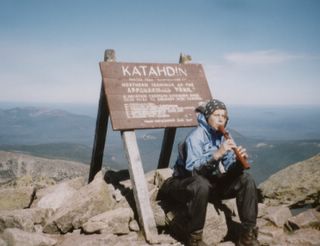
I haven't posted here for quite a bit. It isn't that I'm no longer watching the political free for all, just that I'm tired. Tired of all the hurtful things that we say about each other, tired of the promise to reach across the isle being shoved aside to get votes and news coverage. Tired of the members of Congress who do try to discuss the issues being drowned out by the words of the radicals and reactionaries. I'm not just talking about the disruptive right messing up town hall meetings; I'm also talking about the liberal left pouncing on anyone, even conservative Democrats, who expresses even the slightest hesitation to spend, spend, spend, on social programs and economic stimulus. I posted a comment in response to an Orcinus post about Blue Dog Democrats. Someone suggested I was a "concern troll", another called my post sanctimonious (Well , maybe it was a bit). I tried to clarify my meaning today. Not sure if it will help to convince the posters that I am not a troll. It isn't that I oppose health care reform, or helping out those hurt in this economic mess, its just that I don't think we are doing a good job of analyzing the problems ,and everyone knows that the first step in solving a problem is deciding what it is?
My friend Charles and I have a lot of political discussions. He's a mostly Republican; I'm a mostly Democrat. One thing we can agree on is that both of us care about this country and its people. We often agree on other things too. We believe in doing volunteer work to help others, the importance of a good public education system, and that children are being brought up in a world that is more violent, and less nurturing than the one we were brought up in. He's a devout Christian; I'm a UU, but we agree that the values we share are not reflected in most of the mass media. We agree that the war on drugs is failing, but we disagree on how to fix it. We agree that the health care system is in shambles, but we disagree on a public system. We could probably agree that, regardless of how it is funded, fixing it will require a major overhaul, and a change in behavior for Americans regarding diet, exercise and drug and alcohol use. His son is a medical researcher, so I think we could agree that our government should spend more on research to prevent and treat diseases like Alzheimers, cancer, diabetes, etc. We both believe in taking care of our natural world. He is a member of the farm bureau and despite my decision to be a vegetarian, I have to admit that he knows more about animal welfare, and caring for our land and water than I do.
The point of this post is that both Charles and I are in the middle, and no one is listening to us. Not to either one of us, because I think he would want the people shouting at the town halls to be quiet and talk about how to fix health care, and I would like the liberals to stop throwing money at every problem instead of carefully analyzing the situation and deciding how to fix the problems. Maybe the Blue Dogs represent us both.
Showing posts with label politics. Show all posts
Showing posts with label politics. Show all posts
Sunday, August 09, 2009


Saturday, February 23, 2008
Monopoly
When I was a child, cold winter Saturdays like this one were often spent in the tower of a Victorian mansion that had been made into four apartments. My best friend’s family lived in the apartment on the top floor that used to be the attic of the mansion. My family lived in the duplex in the ally behind the apartments, where the stable for the mansion once stood. The kids in our neighborhood spent their 10 - 25 cent weekly allowance on coke, pretzel sticks, and penny candy. Then we settled in around a big table and enjoyed this game of high finance that was developed during the great depression. The game ended hours later when one of us had accumulated most of the property and wealth and someone else went bankrupt paying the rent required for landing on the other’s property full of hotels.
The game was developed during the great depression, when the country reaped the result of years of over extended credit, unbridled greed, and the consolidation of wealth. So it seemed fitting that I was playing Monopoly in a made over Victorian mansion, though I had no clue about the history of either as I munched on my pretzels and drank my Coke.
The Gilded Age and the Jazz Age that preceded the worst economic depression in history were periods of unprecedented corporate growth. An increasingly smaller percentage of the population controlled not only business, but through their wealth also influenced the political process to their advantage. These were times when the gap in the distribution of wealth between workers and those who owned the means of production increased dramatically. This was also the age of the muckrakers and the trust buster, Teddy Roosevelt. There are many similarities between this period of history and our own. Is John McCain a Teddy Roosevelt Republican hiding in a Reagan costume? Check out my guest column on the Cosmic Message web site?Saturday, February 09, 2008
Half-truths, Lies, and Exaggerations
 Diogenes, the Greek philosopher alleged to have walked around with his lamp looking for an honest man, is a pitiful image. But even more to be pitied is any American voter looking for a crumb of truth in the campaign ads and debates of this presidential election. If you haven’t visited The Annenberg Political Fact Check in search of the truth, you should grab your lamp and click the link.
 Even if we had the patience, it is difficult to find media access to the truth. There are some exceptions, but they are hidden away in the deep recesses of the Internet, on the shelves of libraries, or in scholarly journals that almost no one reads. There is even some truth to be found in the halls of Congress during the committee hearings, and once in a great while, the mass media presents a truly good documentary or scholarly discussion.
Friday, February 01, 2008
Hope Renewed by the Democratic Debate
I have to admit I've grown pretty pessimistic during the Bush presidency. I didn't start out that way. I was actually ready to give him a chance when he won (?) the election. I mean, how bad could it get? Even Republicans love this country, don't they? What has happened in American politics during this president's administration was beyond my worst nightmare, and I can conjure up some pretty nasty dreams when I am in a pessimistic mood.
Nothing in this presidential primary gave me cause to change my mood until last night's Democratic debate. Unlike their front running Republican counterparts, both Obama and Clinton handled themselves with the class I expect from someone who is campaigning to be our president. For more of my view of the debate and to join the discussion, visit the Cosmic Message. The debate didn't exactly make an optimist out of me, but I did find some hope.
Nothing in this presidential primary gave me cause to change my mood until last night's Democratic debate. Unlike their front running Republican counterparts, both Obama and Clinton handled themselves with the class I expect from someone who is campaigning to be our president. For more of my view of the debate and to join the discussion, visit the Cosmic Message. The debate didn't exactly make an optimist out of me, but I did find some hope.
Saturday, August 18, 2007
The DOW and the TAO
 On August 19th the DOW Industrial Average hit 14,000, and then it started gyrating around like a balloon that has been blown up and released without a knot at the end. Having predicted a credit created tsunami for over ten years now, I can’t say I was surprised. Corporate America with the help of the government marionettes has been propping up our economy with credit while stealing its valuable resources and picking the pockets of lower and middle income Americas for a long time. While the advertisers were inundating the public with the messages of unbridled consumerism and the financial institutions promoted funding it with credit card and home equity debt, there was a fundamental truth to which no one was paying attention except those who found themselves with nothing left to hock, not even the possibility of future earnings. James McMurtry has a song about it, “We Can’t Make it Here Anymore”.
There is something fundamentally wrong with a society that consumes more than it produces. You don’t need an MBA to understand this concept, but the idea of being able to consume without end and reap without harvesting is so intoxicating that even a lot of MBAs allowed themselves to be sucked in. I was watching CNBC during the rise to 14,000, when the money pundits were gushing about Goldilocks and stomping like bulls. They were singing the praises of globalization like overwrought converts at a religious revival. Then the credit balloon got away, and the Dow went haywire. Suddenly the tone turned to panic and there were prayers for the Federal Reserve Board to come and save them from certain destruction. "Lower the interest rates!", they cried. "Add some liquidity!" At the same time, products produced for a big profit in China were increasingly found to be defective. Law suits loom on the horizon to rob investors of anticipated profits and rising stock prices. The very people who were all about globalization and deregulation are now crying for the American government and the taxpayers to step in to protect them.
I was also watching the sad drama being played out in Utah where six miners are trapped and others have died trying to rescue them. In my mind, I made a connection between these two events. There was greed involved in the mining and greed involved in the hedge funds and mortgage markets. Too much coal had been removed to support the mountain above it. Those who stood to gain most from mining it knew they were taking a big risk. When the roof fell in, the owner wanted to blame it on nature, not humans taking so much coal from the mine that the mountain needed to fill the void. They propped up the roof, but you can only defy the laws of the universe for so long. Those who made the plans to do retreat mining and reaped the lion’s share of the monetary rewards from it weren’t the ones trapped and dead when the ceiling collapsed. The owners kept reassuring the miners that the mine was safe, that they were looking out for them. Those who lent credit at high interest rates to poor credit risks knew that these loans were risky, yet government and economic leaders keep telling us that the economy is solid and growing. But when the loans can’t be repaid after years of trying, it will be the American consumers who are left with nothing to show for their years of labor and sacrifice, not the big investors or the government officials that they financed and duped the public into electing . The roof of this economy is being supported on the backs of lower and middle class Americans who are in hock over their heads, and are losing their jobs to cheap labor in foreign countries and exploited illegal immigrants. The Federal Reserve might be able to shore it up by lowering the interest rates again, but we cannot defy the laws of nature forever. When the collapse comes, those who have been making the economic decisions will be counting their profits in some offshore resort while the rest of us try to dig ourselves out of the rubble. It is time for us to develop some respect for nature and learn from it instead of abusing it. We need to look to the TAO for guidance, not the DOW.

When a country obtains great power,
it becomes like the sea:
all streams run downward into it.
The more powerful it grows,
the greater the need for humility.
Humility means trusting the Tao,
thus never needing to be defensive.
A great nation is like a great man:
When he makes a mistake, he realizes it.
Having realized it, he admits it.
Having admitted it, he corrects it.
He considers those who point out his faults
as his most benevolent teachers.
He thinks of his enemy as the shadow that he himself casts.
If a nation is centered in the Tao,
if it nourishes its own people
and doesn't meddle in the affairs of others,
it will be a light to all nations in the world.
Tao Te Ching, 31 Lao-tzu
Monday, July 23, 2007
Sicko and Harry Potter
Call me cheap or just not very interested in pop culture, but I normally wait for the movies to come out on DVD and borrow them from the local library or watch them on TV. This weekend was a first for me. I just couldn't resist seeing two movies at the theater.
I love the creativity and fantasy of the Harry Potter books and when paired with the magic of Hollywood special effects artists, the Harry Potter movies just have to be seen on the big screen. After getting a great Harry Potter fix at the movie, I can now peacefully curl up and read the Deathly Hallows. It could be a few days until I post on this blog again. Is there such a thing as a "Potter Overdose"?
Michael Moore's Sicko had me laughing, but there is nothing funny about the American health care system except the American public's willingness to accept it in the name of "free market capitalism" and as a result of savvy marketing and political contributions by the insurance and drug industries. I have to admit, I had tears in my eyes as the 9/11 rescue workers got compassionate treatment from the Cuban doctors that they couldn't get at home.
Maybe if we ask Castro nicely, he will offer care to some of our wounded Iraq War Vets who can't seem to jump through the right hoops to get the care they were promised. Maybe the Cubans would help out the never mentioned civilian contract workers who have been wounded or are suffering from PTSD. I wonder how many of these American heroes will be denied health insurance later in life because of preexisting conditions they acquired during their service to our country. I wonder if the government will deny that the war had anything to do with these conditions. I wonder how many of the surviving spouses and children of those who have died will be unable to afford treatment if they become ill. Just some interesting facts about those contractors though it isn't even possible to get accurate statistics about how many there are or how many have died or been wounded.
If you want a true picture of all the people fighting this war in our name, you should read Brook's article or view the videos at Civilians at War.
I wonder if we pull out the troops if we will bring the civilians out too.
OK, I've had enough politics and real life for a bit, I'm off to lose myself in a magical world with some of my favorite book people. Catch you in a day or two.
I love the creativity and fantasy of the Harry Potter books and when paired with the magic of Hollywood special effects artists, the Harry Potter movies just have to be seen on the big screen. After getting a great Harry Potter fix at the movie, I can now peacefully curl up and read the Deathly Hallows. It could be a few days until I post on this blog again. Is there such a thing as a "Potter Overdose"?
Michael Moore's Sicko had me laughing, but there is nothing funny about the American health care system except the American public's willingness to accept it in the name of "free market capitalism" and as a result of savvy marketing and political contributions by the insurance and drug industries. I have to admit, I had tears in my eyes as the 9/11 rescue workers got compassionate treatment from the Cuban doctors that they couldn't get at home.
Maybe if we ask Castro nicely, he will offer care to some of our wounded Iraq War Vets who can't seem to jump through the right hoops to get the care they were promised. Maybe the Cubans would help out the never mentioned civilian contract workers who have been wounded or are suffering from PTSD. I wonder how many of these American heroes will be denied health insurance later in life because of preexisting conditions they acquired during their service to our country. I wonder if the government will deny that the war had anything to do with these conditions. I wonder how many of the surviving spouses and children of those who have died will be unable to afford treatment if they become ill. Just some interesting facts about those contractors though it isn't even possible to get accurate statistics about how many there are or how many have died or been wounded.
"In Iraq today, an estimated 126,000 Defense Department civilian contractors support 145,000 troops. Thousands more civilians work under contract to other U.S. government agencies."Rosa Brooks
"After The New York Times submitted a Freedom of Information Act request, the Department of Labor acknowledged 917 deaths, including at least 146 during the first quarter of 2007. Another 12,000 have been wounded or hurt, and those numbers almost certainly underestimate the true toll."
If you want a true picture of all the people fighting this war in our name, you should read Brook's article or view the videos at Civilians at War.
I wonder if we pull out the troops if we will bring the civilians out too.
OK, I've had enough politics and real life for a bit, I'm off to lose myself in a magical world with some of my favorite book people. Catch you in a day or two.
Thursday, July 19, 2007
Voice from Cleveland
After reading Dick Feagler's latest column, "There's nothing to gain in Iraq, or here at home, by fighting this war" I just have to express my appreciation for his honest and straight forward presentation of the truth as he sees it. I don't think he is that well known outside of the Cleveland area. That is too bad because I think his is a voice that speaks for the average guy on the street in many places besides Cleveland. So in keeping with my goal on this blog to, "amplify the voice of others who need to be heard". I am humbly recommending the columns of Dick Feagler published in the Cleveland Plain Dealer to those of you who haven't been listening to this voice from Cleveland.
Wednesday, July 18, 2007
Be Afraid, Be Very Afraid
"The only security of all is in a free press. The force of public opinion cannot be resisted when permitted freely to be expressed. The agitation it produces must be submitted to. It is necessary, to keep the waters pure." --Thomas Jefferson to Lafayette, 1823.
First, are all the media mergers that place control of the mass media in the hands of media conglomerates. Nine companies, Disney, CBS, Time Warner, News Corp, Bertelsmann AG, Viacom, General Electric, Lagardère Group and Vivendi SA own 90% of the market. There is one and only one guiding principle for these mega corporations, “make a profit”. For a good discussion of the deterioration in the mass media’s coverage of the news I would refer you to an article at Cyber College titled, The Decline of TV News Coverage. One of the most recent takeovers was yesterday’s sale of the Wall Street Journal to News Corp. Now, I’m not a great fan of many of the opinions expressed in the Wall Street Journal, but I do read it on occasion and look to it for a conservative and business point of view on the news and as a source for understanding the economic world of big business and multinational corporations. What I don’t want to read in the Wall Street Journal is what I read in all the other newspapers and see on TV.
Second is the continuing effort by multinational corporations and many of our current “corporate owned” elected officials to control the Internet and restrict the free flow of information and harness it for profit. As newspaper, television, radio, and motion picture media has increasingly come under the control of big corporations concerned only with profit, not information, factual reporting or democracy; the Internet has become the best hope for the spread of democracy throughout the world and the continuation of our own. But as Cosmic has posted on his website, the average American is too distracted by endless debates on
“As special interests jockey for control of the information highway, consumer input has become noticeably absent from the conversation. Unable to express their concerns, people are reduced to passive listeners, voiceless to interject their opinions about the most significant free speech matter to emerge in the past 75 years. Instead of focusing on a substantive policy which assures the Internet will be shared equally by everyone at an affordable price, the slugfest has degenerated into a hostile engagement about who will profit the most from its future deployment.”
It is time for freedom loving Americans to protect free speech and free press, fundamental rights guaranteed in our First Amendment. The founding fathers knew the importance of these rights to our continued survival as a free nation. Join the fight to Save the Internet for the people.
"We all take for granted the freedom that the internet gives us to access any piece of information, ranging from the smallest website to the largest. Most importantly, we take for granted the freedom it gives us to share our opinions. Imagine, if you will, an Internet where certain websites are blocked or take a prolonged amount of time to load just because the broadband provider you subscribe to doesn't agree with the opinions or content presented on them. The great innovations that come from an open, collaborative environment would be stalled, if not completely halted."
"Media conglomerates threaten Internet neutrality" Polytechnic Online
Tuesday, July 17, 2007
Five Weeks Later
Once long ago, I was hooked on a soap opera. I used to watch it every afternoon when I had the chance. The funny thing about soap operas is that you can miss a few weeks and pick right up again because nothing much has really gone on while you have not been watching. I just got back from a five week vacation ( more about that later), turned on my TV to the United States "Congressional soap opera" and was not surprised to find that nothing much has changed while I was tuned out. Tonight the Senate is having an all night discussion of the War in Iraq, but everyone knows that it won't change anything. But this isn't a soap opera. People are really dying while the characters in Congress talk and talk and talk.
I wasn't for this war. I didn't need a crystal ball to know how it would turn out. What I don't understand is that anyone who had gone through the Vietnam era could fail to predict the consequences of trying to make a country composed of religious and ethnic factions that don't like each other into a democracy by outside military intervention. Obviously the president was too busy flying planes over Texas, watching baseball (?) and drinking (?) to pay much attention to Vietnam. I am furious that those who were elected to lead this country let us get into this situation, but I know that playing the blame game will not get us out. I also know that looking for the perfect solution will not get us out because there is no good plan, only bad plans and worse plans. Anne Applebaum, No Magic Bullets For Iraq, does a great job of explaining flaws with the proposed solutions.
I don't have the magic answer, but I am certain of one thing, continuing to do more of what we are already doing is the worst plan we could possibly follow. I hope that Congress quits talking and starts acting soon because the hole that Bush is digging will soon be so deep that we may never find a way to climb out of it. I was glad to see that Senator Voinovich suggested a plan to the president. I'm not sure if it will work, but when you are at the bottom of a deep hole any plan is better than continuing to dig. Members of Congress need to stop talking and force the "Decider" to stop digging and start building a ladder.
I wasn't for this war. I didn't need a crystal ball to know how it would turn out. What I don't understand is that anyone who had gone through the Vietnam era could fail to predict the consequences of trying to make a country composed of religious and ethnic factions that don't like each other into a democracy by outside military intervention. Obviously the president was too busy flying planes over Texas, watching baseball (?) and drinking (?) to pay much attention to Vietnam. I am furious that those who were elected to lead this country let us get into this situation, but I know that playing the blame game will not get us out. I also know that looking for the perfect solution will not get us out because there is no good plan, only bad plans and worse plans. Anne Applebaum, No Magic Bullets For Iraq, does a great job of explaining flaws with the proposed solutions.
I don't have the magic answer, but I am certain of one thing, continuing to do more of what we are already doing is the worst plan we could possibly follow. I hope that Congress quits talking and starts acting soon because the hole that Bush is digging will soon be so deep that we may never find a way to climb out of it. I was glad to see that Senator Voinovich suggested a plan to the president. I'm not sure if it will work, but when you are at the bottom of a deep hole any plan is better than continuing to dig. Members of Congress need to stop talking and force the "Decider" to stop digging and start building a ladder.
Saturday, June 09, 2007
People with Questions
A link to my post about the '08 candidates led me to the Six Questions Blog. The blogger, Linda has sent six questions to the presidential hopefuls of both parties. I will be anxious to see if she gets answers and if the candidates respond, what they will say. I really like question number 5
"This country requires alternative sources of energy.
"This country requires alternative sources of energy.
- a. Are you willing to ask the American people to make major lifestyle changes (for example, give up the suburban life of big box stores and malls where the only way to get to anything is to drive a car) in order to ease the transition from a fossil fuel based energy system?
b. Are you willing to speak honestly to the American people about what it would take to move to alternative energy at no matter the costs to your political career?"
Friday, June 08, 2007
What I Want a Presidential Candidate to Say
Dennis Kucinich comes closest to my view on this important issue. He has proposed a plan (Gosh imagine that! Someone with a plan!) to get us out by working through the UN and using diplomacy to bring other nations in to bring security to
It is interesting that the Democrats claim to represent American workers but support President Bush’s “comprehensive” immigration reform package that would continue to maintain an underclass of illegal or cheap labor for exploitation by American corporations. I definitely am opposed to any guest worker program. If we need more workers in the
If any of the Democratic candidates for president expect my vote next election they need to fix their stand on immigration reform.
1) Compassionate visas (C- Visas) for undocumented workers who have immediate family who are American citizens, including parents of minor children who are citizens. The C Visa would allow them to stay in the
2) Border security would need to be increased with additional trained border patrol and physical and virtual barriers.
3) A tamper-proof ID system would need to be in place for all legal residents and citizens of the
Fining a small business $5,000 for hiring an illegal employee is significant. Fining a major corporation the same amount is not a deterrent. Fines would increase for repeat offenders. No driver’s licenses would be issued by states without proof of the applicant’s legal right to reside and work in the
I know the argument about giving up our privacy and big brother watching us, but I have already given up my privacy to financial institutions, insurance companies, Internet advertisers, etc. The IRS already knows where I work and everything about me. For a change, I would like to see the technology used to protect my identity and my rights instead of using it to protect the rights of business and financial institutions to exploit me.
4) The quota for legal immigration should be increased.
5) Employers who wish to have someone enter the country under an H 1 visa should provide evidence that they are paying that individual the prevailing wage for American workers working in similar positions and provide evidence that they have attempted to hire an American worker to fill the position.
International Trade and Port Security
I am opposed to allowing foreign corporations to operate our ports. The ports in the
Tuesday, May 08, 2007
Opportunity Cost of the War in Iraq
Most people are familiar with the term opportunity cost in economics. It means that when you have committed your resources to one particular course of action, you lose the opportunity to make other choices. Those lost opportunities and the benefits that could be had by making another choice are part of the cost of your decision. Thanks to Jill at Write Like She Talks and Susan at Blue Ohioan for pointing me to a graphic description of the opportunity costs for the War in Iraq.
Check out this catalog of the opportunity cost for the War in Iraq. Yet if any of our politicians had suggested we spend $456 billion to do any of these worthwhile projects, our congressional representatives would have nixed the idea in a hurry claiming it was far too expensive.
Check out this catalog of the opportunity cost for the War in Iraq. Yet if any of our politicians had suggested we spend $456 billion to do any of these worthwhile projects, our congressional representatives would have nixed the idea in a hurry claiming it was far too expensive.
Wednesday, May 02, 2007
Freedom = Responsibility
My daughter, a young teacher, called me the other day upset because some of the students in her school had misbehaved on a field trip. It was a trip that involved the whole school, and the students’ behavior was an embarrassment to everyone involved. She had been instrumental in setting up the trip. She had helped convince the PTA to pay for it. She had looked forward giving the students this experience, but their behavior during lunch had disappointed and angered her. She was also a bit upset because other adults on the trip had given the students in their groups too much freedom. As a young teacher, she didn’t think she needed to tell veteran teachers not to let the students out of their sight in a strip mall. She called me for some motherly empathy and for some advice on what to say to the students the next day.
We each need to take responsibility for protecting the rights and freedoms of others along with our own. That is the foundation of a free society.
Parental rights come with the responsibility to care for the physical, educational and socialization needs of the child.
Freedom of speech comes with the responsibility to speak the truth, not to endanger the community by inducing panic, and to use one’s speech for good, not for exploiting others.
Saturday, April 21, 2007
All the Lonely People
My first reaction to the tragedy at Virginia Tech was of course great sadness and sympathy for the victims and their families. My second reaction was similar to that of Jeff’s at Have Coffee Will Write, the realization, not intellectually, but emotionally, that in other places in the world this happens every day. Then as I learned more about the young man who killed so many and ended his own life, I just kept hearing the Beatles song, “Eleanor Rigby”.
“All the lonely people,
Where do they all come from?
All the lonely people,
Where do they all belong?”
Erik Erikson describes adolescence as the stage of Identity vs. Role Confusion. It is interesting that Seung gave himself the name, Question Mark, a poignant expression of his inability to navigate the turbulent waters of adolescence. The roommates interviewed on television describe living with him for a whole year and never having a conversation with him. I can only imagine the pain he felt never being able to make a connection with anyone on campus. It would be like being in solitary confinement for years but able to watch others as they supported, and nurtured each other. Seung was in severe psychological pain. If we saw someone in comparable physical pain, we would rush him to the hospital. We would demand appropriate treatment, and we would do what we could to ease the pain. But this society does not recognize the need to treat psychological pain with the same urgency as physical pain. Even when parents or a close relative recognize the individual’s desperate need for help, treatment is difficult to get. For a good discussion of the difficulty of getting help for a family member listen to this discussion from NPR.
The news coverage of this story has filled me with sadness and anger. I am filled with sadness for the victims and their families, for Seung’s family and for Seung. I am angry because our society will fix the blame for this tragedy on Seung and do nothing to fix the problems in our mental health and legal systems. I am angry at the media for showing the images that Seung sent to NBC and for dwelling on every detail of the tragedy instead of spending their time talking about how the system failed and what we can do to fix it. I don’t buy the excuse that they are showing the images because they want to understand the motivation of the killer.
We already know many of the changes we can make to prevent similar tragedies. Here are some of them.
2) Provide more mental health support for children and families through guidance counselors and psychologists in our schools.
3) Provide outpatient support for the mentally ill. This would include group homes, therapy, medication, employment counseling.
4) Change the law to make it easier for family members to involuntarily commit a psychotic individual into a treatment facility.
6) As individuals and as a society, we need to reach out to all the lonely people and help them find a place to belong. We are becoming more and more isolated from each other. This is a society that emphasizes competition over cooperation. From an early age children are placed in competition with each other even in after school activities. The increasing need for both parents in a family to work and the need for people to move away from extended family to find or maintain employment has reduced the social support for children. While we are worried about leaving no child behind academically and place great pressure on young people to achieve and compete, we are failing to help them find the belonging and identity they seek during adolescence.
Saturday, April 14, 2007
Double Dipping
There has been an ongoing discussion in our local newspaper , by one of our op ed columnists and now on the radio and in blogs about double dipping public employees, those who have retired, collect their retirement and then are re-employed. At first, I was just going to post a comment on Jill's blog, but I got carried away, so I wrote my own post on the topic.
I am a double dipping teacher. I am saving taxpayers in my district a lot of money. First, I chose to retire at 55 with 30 years. I was at the top of the salary schedule based on education and experience. When I retired, a young teacher took that position at step one on the salary schedule. I could have continued to teach and collect my salary plus benefits. This would also have given me greater benefits when I eventually retired.
This year, I am working part-time tutoring at a local school district while collecting my pension benefits. I am paid hourly and get no health benefits. Because STRS no longer pays any benefits for spouses and only part of mine, I paid over $8,000 in health insurance. The district that hired me is getting a deal. I am still paying into STRS and so is the district. I will never collect social security benefits even though I paid into the system.
When looking at the difference between private employment and public employment, it is good to examine some of the perks that those who are in private employment get that public employees do not. My brother is an accountant who works for a private company. Here are some of the perks he has gotten that I did not. Over his career, he has made a lot more money than I have. He has a 401 K plan that both he and the employer have paid into. He has gotten profit sharing, stock and yearly bonuses as part of his compensation.
My brother has not chosen to get his master’s degree, but if he would have done so, the company would have paid for it and given him increased salary upon completion. For me it was not a choice; I had to continue my education to keep my certification. I did choose to get the equivalent of two master’s degrees and did receive a higher compensation because of that, but I paid for those degrees myself. He traveled on company business and got the frequent flyer miles for his vacation. His company has treated him and his family to sporting events, meals, etc. Many of those who are employed in the private sector get a car allowance. For six years, I used my own car on the job as a special education work-study coordinator and was paid mileage that barely covered the gas. When they moved my brother to
My daughter is now a teacher. She graduated 11th in her high school class of 400 and magna cum laude from her university. This June, she will receive her master’s degree from OSU, a degree she is expected to get to keep her teaching license and be considered a “highly qualified teacher” in her field. She has paid for most of this degree. Although her school district has provided partial compensation based on the number of teachers in the district who are going to school each year, it has not paid even half of the expense. In many districts, there is no money at all to pay for the required additional education.
As a graduating senior, my daughter discussed her career options with me. As she weighed the pros and cons of her various options, education lost out as far as compensation and even status. If she would have worked as hard at almost any other occupation as she has at this one, she would be making a lot more money. There were two factors, however, that persuaded her to go into this field. First, she loves children and knows that she is touching lives by what she is doing each day. Second, while the compensation isn’t good by comparison to other careers, she can have a reliable income and a retirement that will meet her needs and the needs of her family. That retirement is part of what she will earn as a teacher, and when she is eligible to retire, I hope that she will have the option to collect it and keep working in public education if she desires to do so. If she does, she will be doing the taxpayers a favor.
In the meantime, if the taxpayers want highly qualified young people like my daughter to enter public employment, they need to remember that the retirement benefits they are promised provide at least part of the incentive to give up more lucrative options in the private sector.
Monday, April 09, 2007
RESPECT
The Imus statement about the
While there seems to be a greater awareness of political correctness these days, I contend that it is not accompanied by an increase in respect for the inherent worth and dignity of every person. While most of us would loudly condemn the Imus remark, we are not above laughing at disrespectful humor or contributing to the biting and demeaning remarks that permeate our society. We are not above watching and thereby supporting, TV shows, movies, and news reports that fail to respect the inherent worth and dignity of people. Take the caustic comments of Simon on American Idol or the intrusion on privacy of the news media as they seek out the most intimate details about the life of anyone unfortunate enough to be of interest to the rest of us. It is so omnipresent that we don’t even see it, a bit like getting so used to the smog in a big city that you don’t realize there is such a thing as clean air. The only time we really notice the smog is when it gets so thick we can hardly breathe at all or we go to the countryside and view the sky without it for a change. That is what happened with the Imus remark, it was so disrespectful that it caused us all to gasp, but it certainly wasn’t alone in polluting our society with verbal disrespect.
A good way to get some perspective is to watch an adult movie from the ‘40s or ‘50’s back to back with a modern PG-13 or R rated movie from today or watch a situation comedy from the late ‘50’s or early ‘60’s before watching a current one. Even better yet, watch the most popular stand up comics from the late ‘50’s and early 60’s and compare them to the most popular comics of today. Even if, like me, you barely flinch at the “F” word anymore, you may notice the way the people show disrespect for each other. Much of the humor is at the expense of someone, not laughing at the paradoxes and foibles of our shared humanness.
When I decided to write a post about this topic, I looked for a definition of respect. What I found was the Stanford Encyclopedia of Philosophy article on the topic. http://plato.stanford.edu/entries/respect/ It did not give a simple definition of the word, but a full discussion of the topic complete with many of the philosophical questions people have had about respect throughout the ages. I found it very interesting. The concluding remarks are worth a direct quote here,
“Everyday discourse and practices insist that respect and self-respect are personally, socially, politically, and morally important, and philosophical discussions of the concepts bear this out. Their roles in our lives as individuals, as people living in complex relations with other people and surrounded by a plethora of other beings and things on which our attitudes and actions have tremendous effects, cannot, as these discussions reveal, be taken lightly. “
This is a warning going unheeded in this society, and it is having dire repercussions. Don Imus, Mel Gibson, Michael Richards, are only the public face of a society that fails to respect people in far more ways than bigoted language and disparaging remarks.
So, what if Imus hadn’t said that on the air? What if he had just remained quietly misogynistic and racist? What if we managed to legislate or humiliate all the bigots and racists into keeping their mouths shut? It might keep the rest of us from gasping, but it wouldn’t end the pollution of disrespect that permeates our communal atmosphere. It is time for a new dialog on respect and a deeper understanding of what it means “to affirm and promote the inherent worth and dignity of every person”. This is the first of our Unitarian Universalist principles, and an essential principle for any society to follow if it is to be healthy. Respect for our shared humanity comes from an understanding that people are not to be treated as objects, not objects to get a laugh, not objects to get us the material things we want, not objects to satisfy our curiousity or make us feel good in comparing ourselves to others. All religions teach us that we need to give others the respect we would wish for ourselves.
Saturday, March 31, 2007
Health Care
While watching C-Span early this morning, I happened to catch a broadcast of the Center for American Progress forum on Health Care . All of the major Democratic candidates spelled out their plans to improve our health care system. You can get video from the forum by going to
The Center For American Progress Action Fund I hope that C-span will air it again soon.
The Center For American Progress Action Fund I hope that C-span will air it again soon.
Voters need more forums like this that give us the opportunity to actually hear what candidates are planning to do to solve the most pressing problems of our nation. It really frustrates me that so much money is being raised by candidates, but their campaigns and the mass media offer voters so little information about what they actually plan to do about the problems.
One thing voters can do to change our politics is to inform themselves by listening to broadcasts like this. Who knows, maybe the next election will be decided based on a candidate's plans instead of their ability to amass cash for negative campaign ads? Wouldn't that send a message to Washington!
Thursday, March 29, 2007
Jury Duty
Yesterday I finished my grand jury experience. In our county the grand jury meets one day every other week, and jurors serve for a three month period. Some states have eliminated the grand jury. Their argument is that it turns out to be just a rubber stamp for the prosecutor’s office and is therefore an unnecessary, time consuming and expensive step. After serving on our grand jury, I do not agree with this assessment. Even though in most cases we did indict, there were a few that we did not. To me the grand jury is a vital protection of our civil rights. What separates a democratic judicial system from a dictatorial one is oversight and participation by ordinary citizens, one’s peers. During the case presentations, we had the opportunity to question our prosecutor and law enforcement. Our job was not to determine someone’s guilt or innocence, but to ensure that citizens are not accused when the evidence against them fails to reach the level of probable cause. One can only imagine the stress, loss of income, expense of legal council, possible damage to one’s reputation, etc. that being accused and forced to make a defense in court can create. Accusing someone of a crime is serious, and citizens should be protected from possible abuse by government. As part of our oversight of our judicial system, grand jurors were even taken on a tour and treated to a jail lunch at the county jail. The consensus appeared to be that the prisoners were humanely treated and nutritiously fed. Even though our jail is modern, clean and well run, none of us desired to spend much time there.
This nation needs to deal with its drug and alcohol problem. It is an epidemic that ruins the lives of and kills not only users and addicts but their family members and even strangers. The cost is tremendous when one considers auto accidents, higher insurance rates, health problems, broken homes, unemployment and lost time on the job, failure to pay child support, child neglect and abuse, domestic violence, crime, cost of law enforcement and prisons, educational failure, and deaths from overdoses and suicides. If there was ever a health problem that deserved our attention and funding for treatment and research to find a cure, addiction should be right at the top of the list, but it isn’t. Why?
One reason is that like obesity, we tend to blame the victim instead of treating the disease. Another reason is that many of us have the disease and are blind to the symptoms because of denial. We fight coming to grips with the problems addiction is causing in our own lives and the lives of our loved ones. As a society, we have grown so used to addiction that we assume it is normal state, and we cannot do anything about it. It is such a part of our social life that it is hard to go anywhere that people are gathered for recreation where it is not present and being abused. Legal drugs are advertised that claim to do everything from stopping hair loss to giving us a good night’s sleep and even improving our sexual experiences. They are advertised, not just with the facts but with all the glitz, comedy and persuasive propaganda the drug companies’ ad agents can muster. Our government’s response, the War On Drugs has made the problem of addiction appear to be a threat from somewhere else, not a problem we need to be personally involved in solving with our family members, our neighbors and our friends.
Monday, March 26, 2007
Sex Education
Do you remember how you learned about sex? I remember my mother sending away for some booklets. She told me to read them and said that after I read them she would answer any questions I had. I had lots of questions! My mother did not have all the answers, but I was better off than most of my friends. They got their information from their friends. One thing she impressed upon me was not to have sex because it would be simply awful to become pregnant and not be married. It would ruin my life and my and my family's reputation. It was the worst sin ever!- Abstinence education.
I learned about condoms from some boys in my class. My friend and I were baby sitting my little brother. My friend had told her boyfriend that we would be there without my parents. The boyfriend brought his buddy, and the two of them asked to come in. When I said no, and the door was locked. They filled up condoms with our water hose, held them up at the window and laughed a lot before smashing them on our porch. I thought they were balloons, but my friend explained that they were rubbers and if you wanted to have sex but not get pregnant that is what the boy had to wear. "Does it work?" I asked. " I guess so", she said "Or else he can just pull it out before he comes." Following that advice got a lot of my friends pregnant before we graduated from high school, but back in 1964 most of them managed to quickly tie the knot with the baby's father before the blessed event. Most had been given the same abstinence talk by their mothers, " Don't have sex before you get married. It's a sin and it will ruin your life and your reputation." I guess my mother was just scarier than theirs because I managed to get accurate birth control information before I had sex.
The reason for recounting this story is to support the need for comprehensive sex education in our schools. Students are going to learn about contraception even if we don't teach them about it in school. Shouldn't we give them accurate information? Fear isn't enough to protect them from STD's and pregnancy before they are ready to be parents.
Join the UUA and the UCC in urging Congress to pass the Responsible Education About Life (REAL) Act. States should not be forced to turn away federal funds because they refuse to teach abstinence only. Our children deserve to have all the facts when they are making some of the most important decisions in their lives.
There is an excellent article written by in UU World about the OWL(Our Whole Lives) Program, the curriculum developed by the UUA and UCC.
I learned about condoms from some boys in my class. My friend and I were baby sitting my little brother. My friend had told her boyfriend that we would be there without my parents. The boyfriend brought his buddy, and the two of them asked to come in. When I said no, and the door was locked. They filled up condoms with our water hose, held them up at the window and laughed a lot before smashing them on our porch. I thought they were balloons, but my friend explained that they were rubbers and if you wanted to have sex but not get pregnant that is what the boy had to wear. "Does it work?" I asked. " I guess so", she said "Or else he can just pull it out before he comes." Following that advice got a lot of my friends pregnant before we graduated from high school, but back in 1964 most of them managed to quickly tie the knot with the baby's father before the blessed event. Most had been given the same abstinence talk by their mothers, " Don't have sex before you get married. It's a sin and it will ruin your life and your reputation." I guess my mother was just scarier than theirs because I managed to get accurate birth control information before I had sex.
The reason for recounting this story is to support the need for comprehensive sex education in our schools. Students are going to learn about contraception even if we don't teach them about it in school. Shouldn't we give them accurate information? Fear isn't enough to protect them from STD's and pregnancy before they are ready to be parents.
Join the UUA and the UCC in urging Congress to pass the Responsible Education About Life (REAL) Act. States should not be forced to turn away federal funds because they refuse to teach abstinence only. Our children deserve to have all the facts when they are making some of the most important decisions in their lives.
There is an excellent article written by in UU World about the OWL(Our Whole Lives) Program, the curriculum developed by the UUA and UCC.
Sunday, March 25, 2007
Darfur
If you haven't seen this CBS video, you should. It will move you to act. When you want to know what you can do, follow these links. At the very least, call or write your Congressional representatives and tell them to put pressure on our government to act.
Ten Things You Can Do - Genocide Intervention Network
Drumbeat for Darfur
Ten Things You Can Do - Genocide Intervention Network
Drumbeat for Darfur
Subscribe to:
Posts (Atom)